Cummins: one global commerce experience, grounded in 83 interviews.
How a design-led discovery took the Global Commerce initiative from "premium product, hard to buy from" to a business-validated prototype, nine research-backed personas, and a phased roadmap — with deliverables that outlived the engagement.
A global engine maker, buying experiences stuck in first gear
Cummins powers everything from semi trucks to data centers — and its Distribution Business Unit serves a sprawling ecosystem of mega dealers, small shops, OEMs, generator dealers, and end customers across North America, Europe, APAC, Latin America, and Africa/Middle East.
But buying from Cummins meant navigating a patchwork of legacy platforms — separate systems for parts, whole goods, and regional portals, each with its own login and logic. The Global Commerce initiative set out to reimagine the digital sales experience end to end: one platform for distributors, dealers, and customers buying whole goods, preconfigured products, and parts.
Design one experience for nine very different buyers
A mega dealer ordering thousands of parts to stock warehouses, an OEM buying first-fit engines for an assembly line, and a homeowner fixing a generator have almost nothing in common — except that Cummins needed to serve all of them through one commerce platform, across five regions with different taxes, compliance regimes, and fulfillment realities.
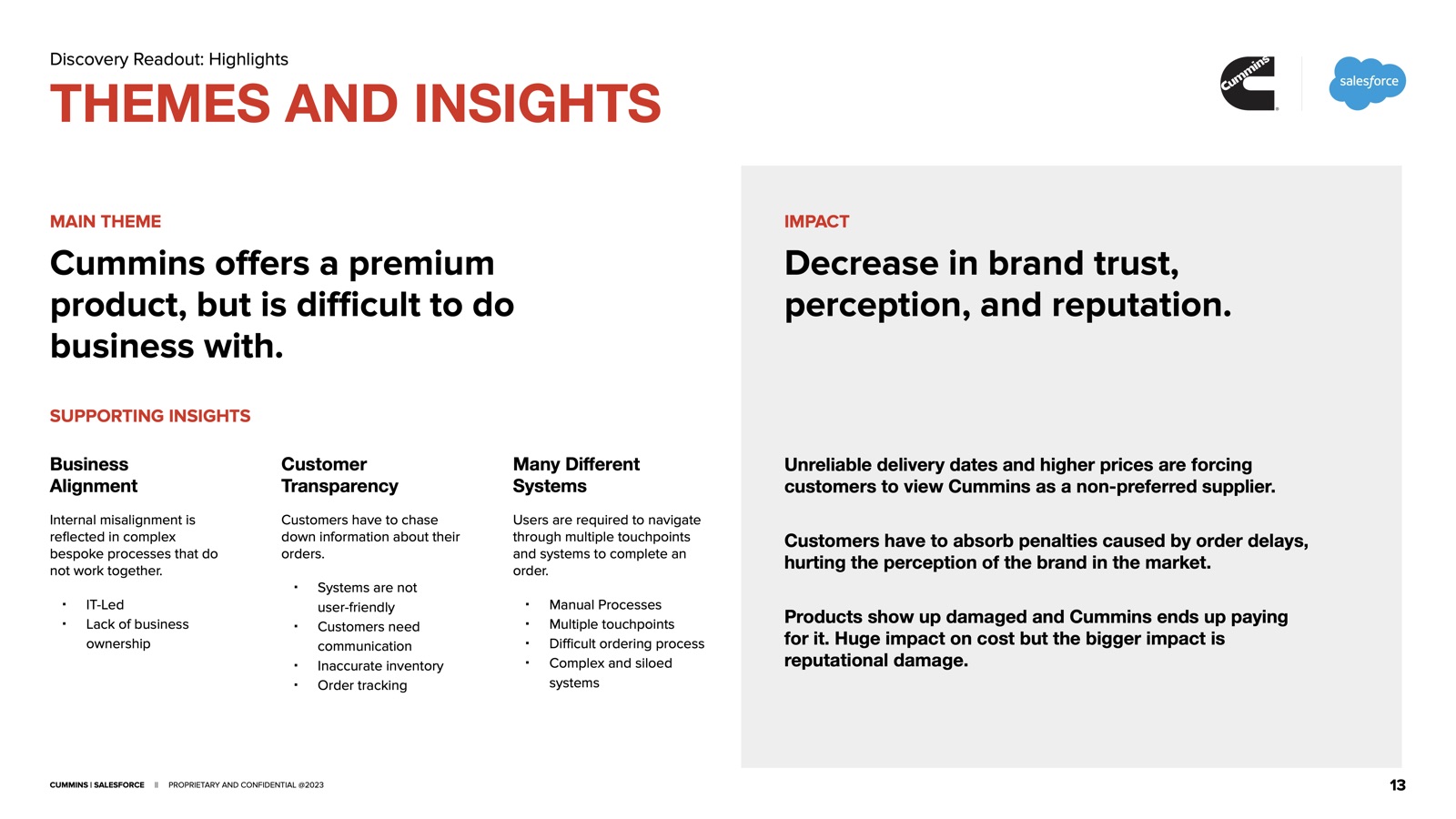
Discovery surfaced the uncomfortable truth that became our north star:
Unreliable delivery dates and fragmented touchpoints were actively eroding brand trust — dealers openly praised competitors' ordering tools. The mandate wasn't just to build commerce; it was to make the buying experience worthy of the product.
Start with the experience, work backwards to the technology
We ran a design-led, human-centered process: understand the problem space deeply, then validate solutions before a line of architecture got drawn.
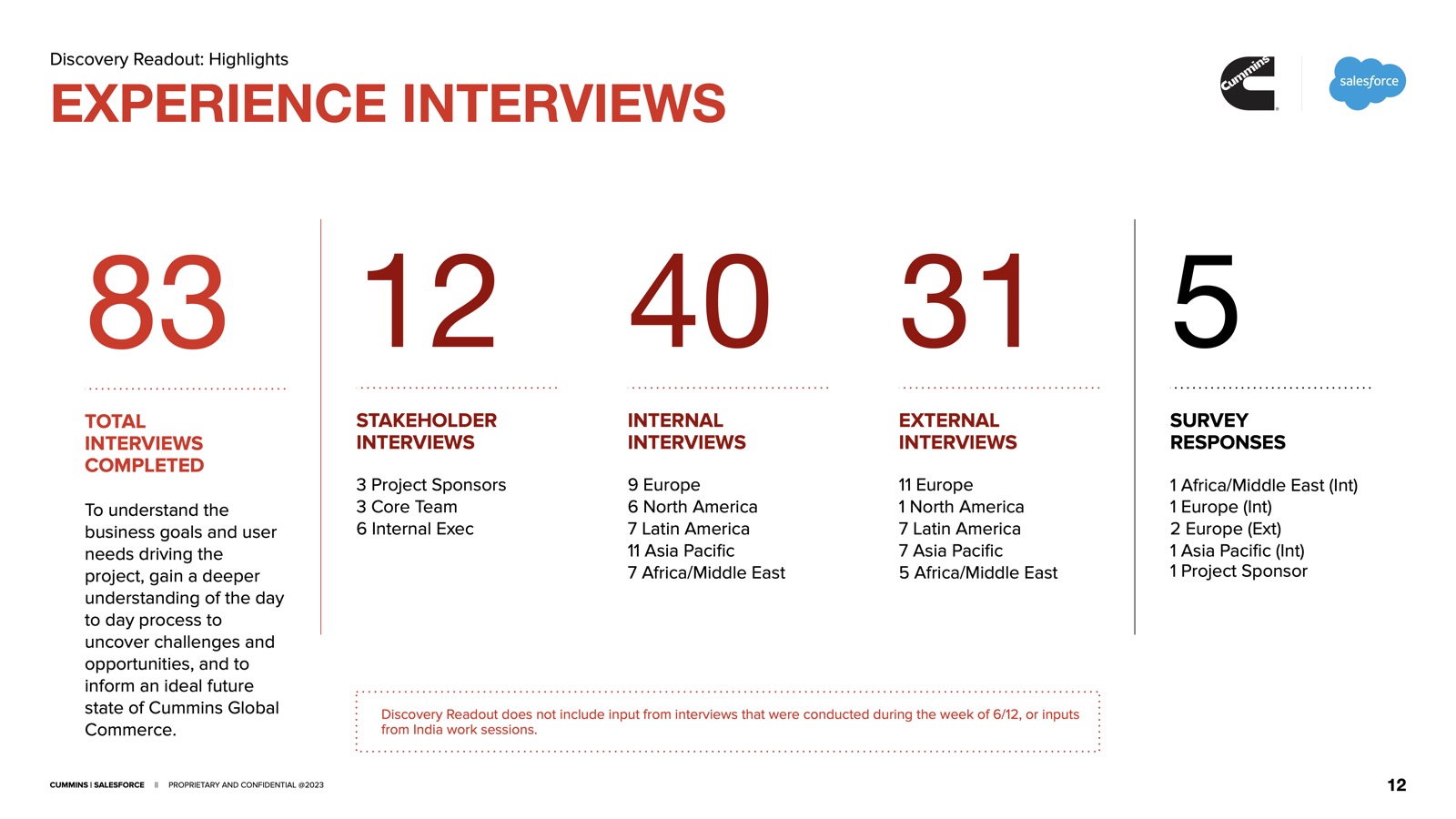
- 83 interviews across every region — 12 stakeholder, 40 internal, 31 external, plus surveys — spanning project sponsors to the dealers and branch teams living the process daily
- Competitive research — including the tools dealers already loved, to set the bar honestly
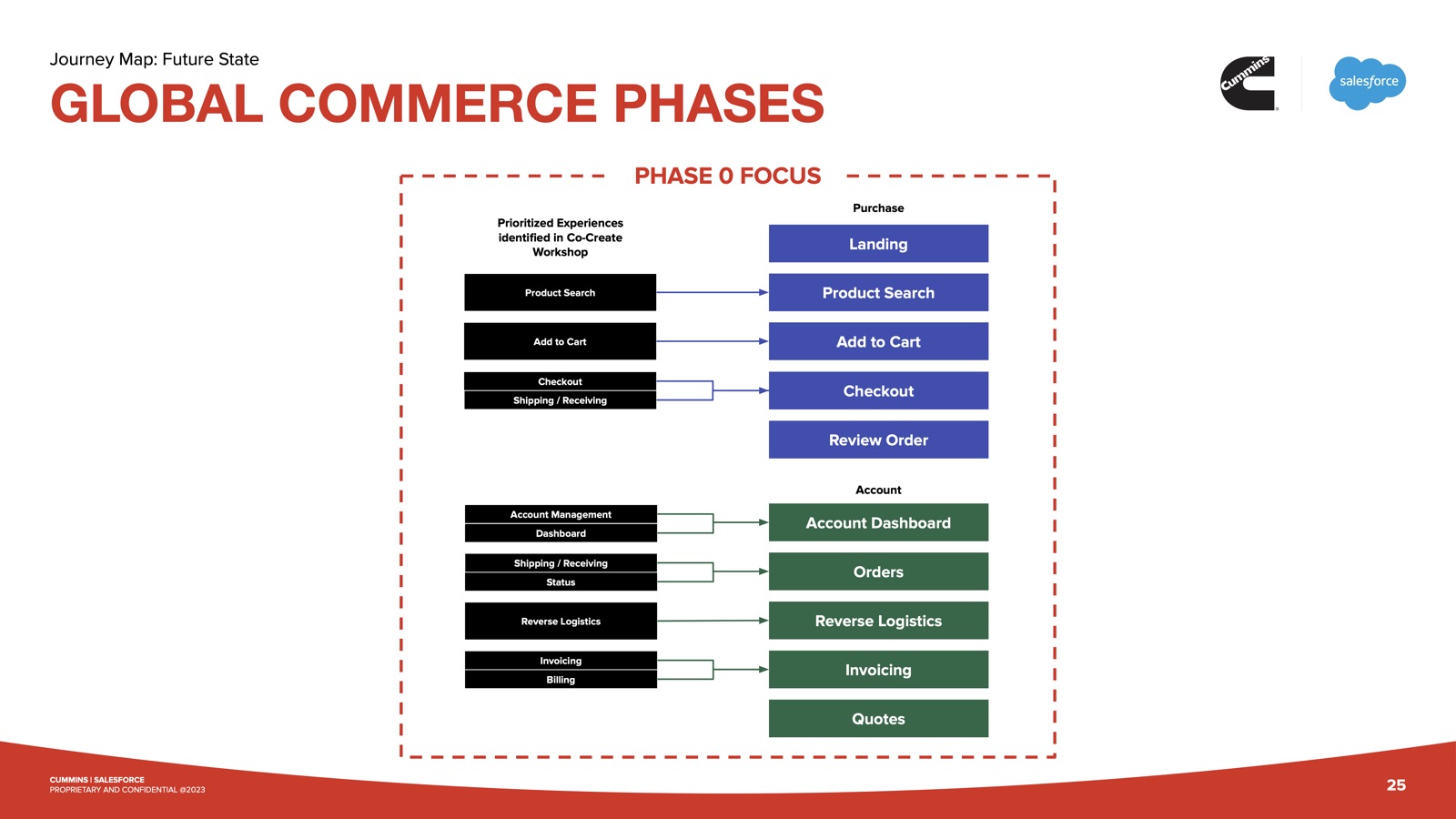
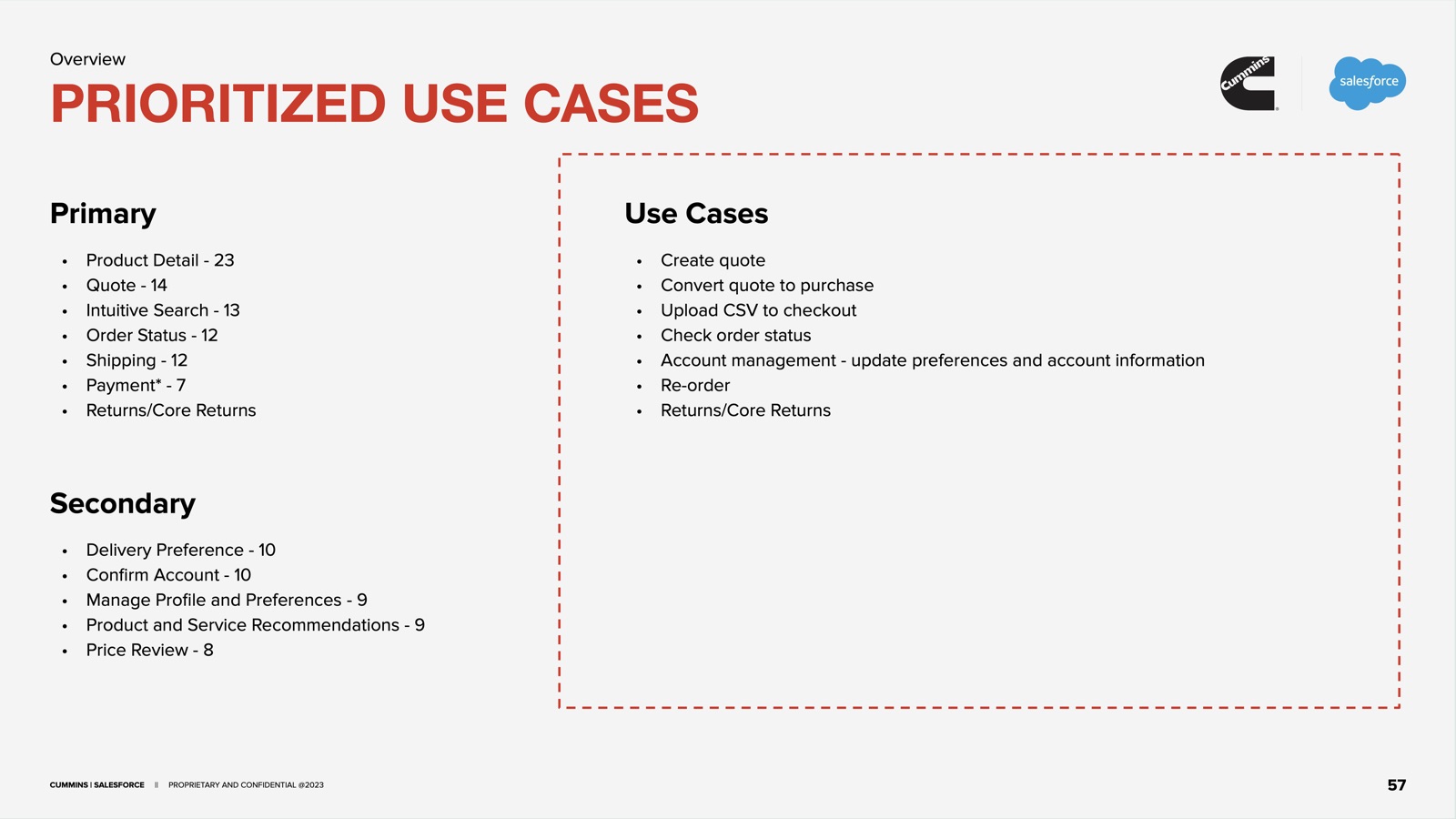
- Jobs-to-be-Done co-create workshops — prioritizing experiences with the business, not for it; use cases were voted into priority order by stakeholders
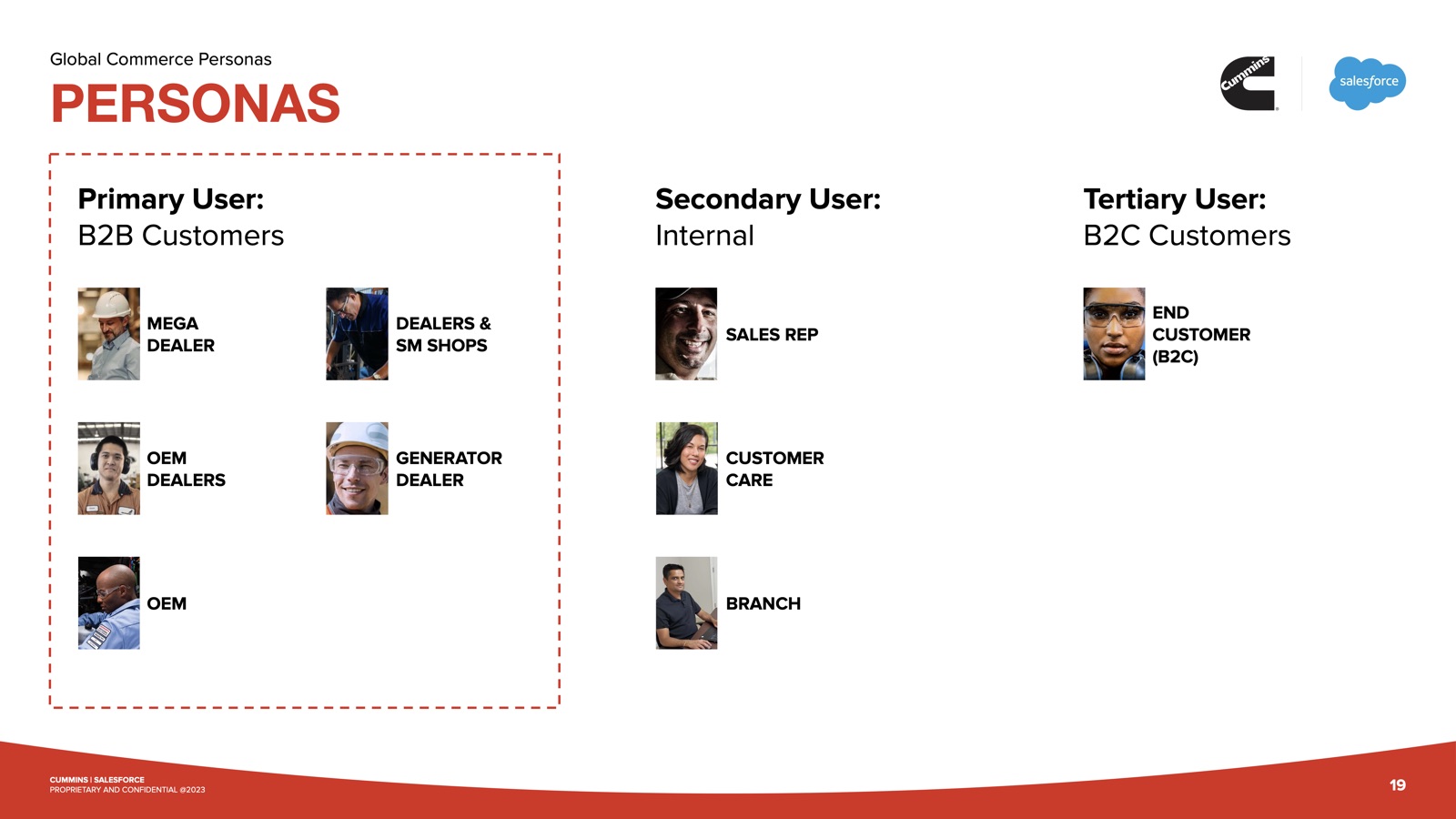
- Nine personas — from mega dealers to internal branch fulfillment teams to B2C end customers, each grounded in interview data
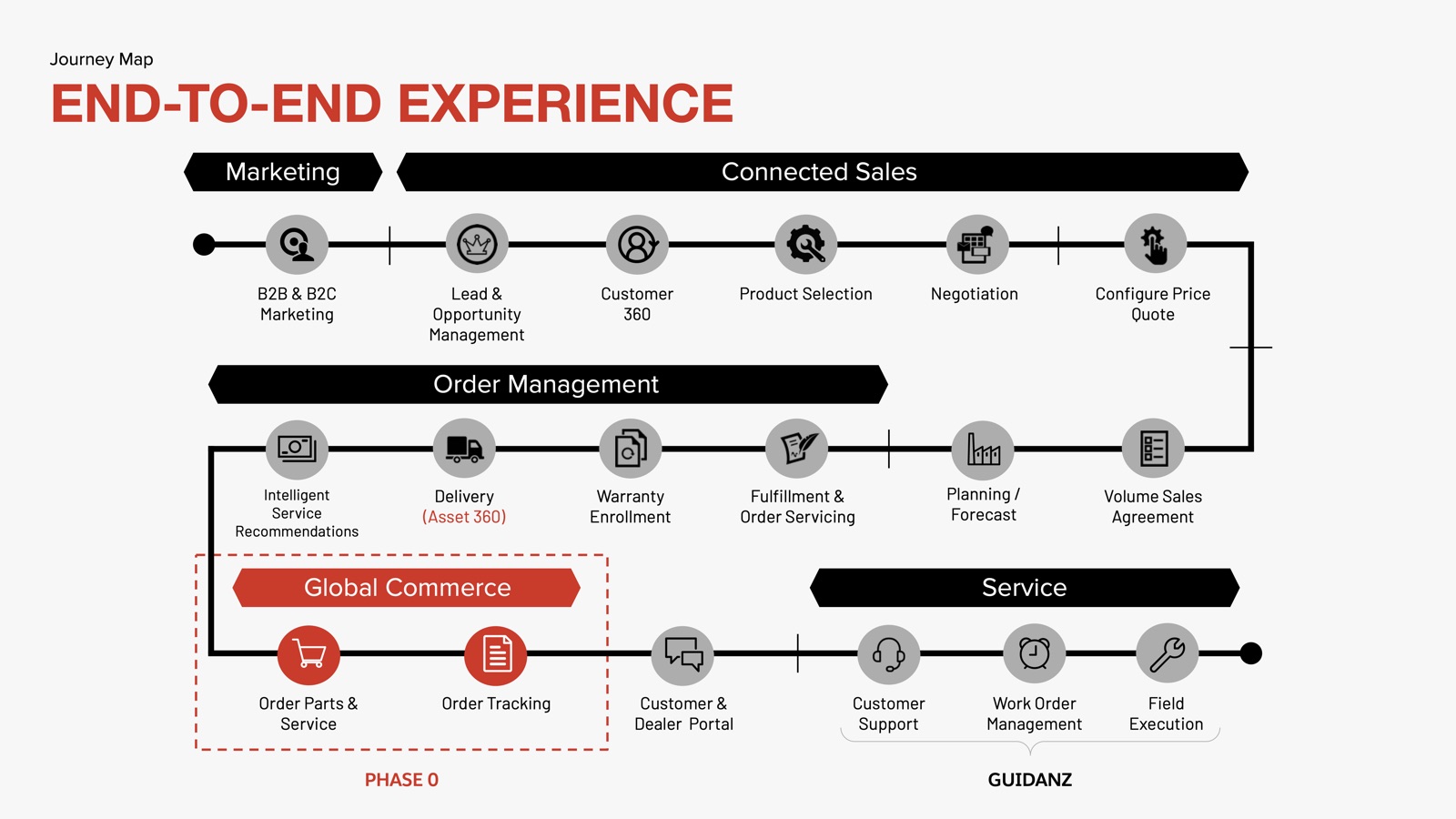
- Current- and future-state journey maps — parts ordering and whole-goods flows mapped as they are, then as they should be
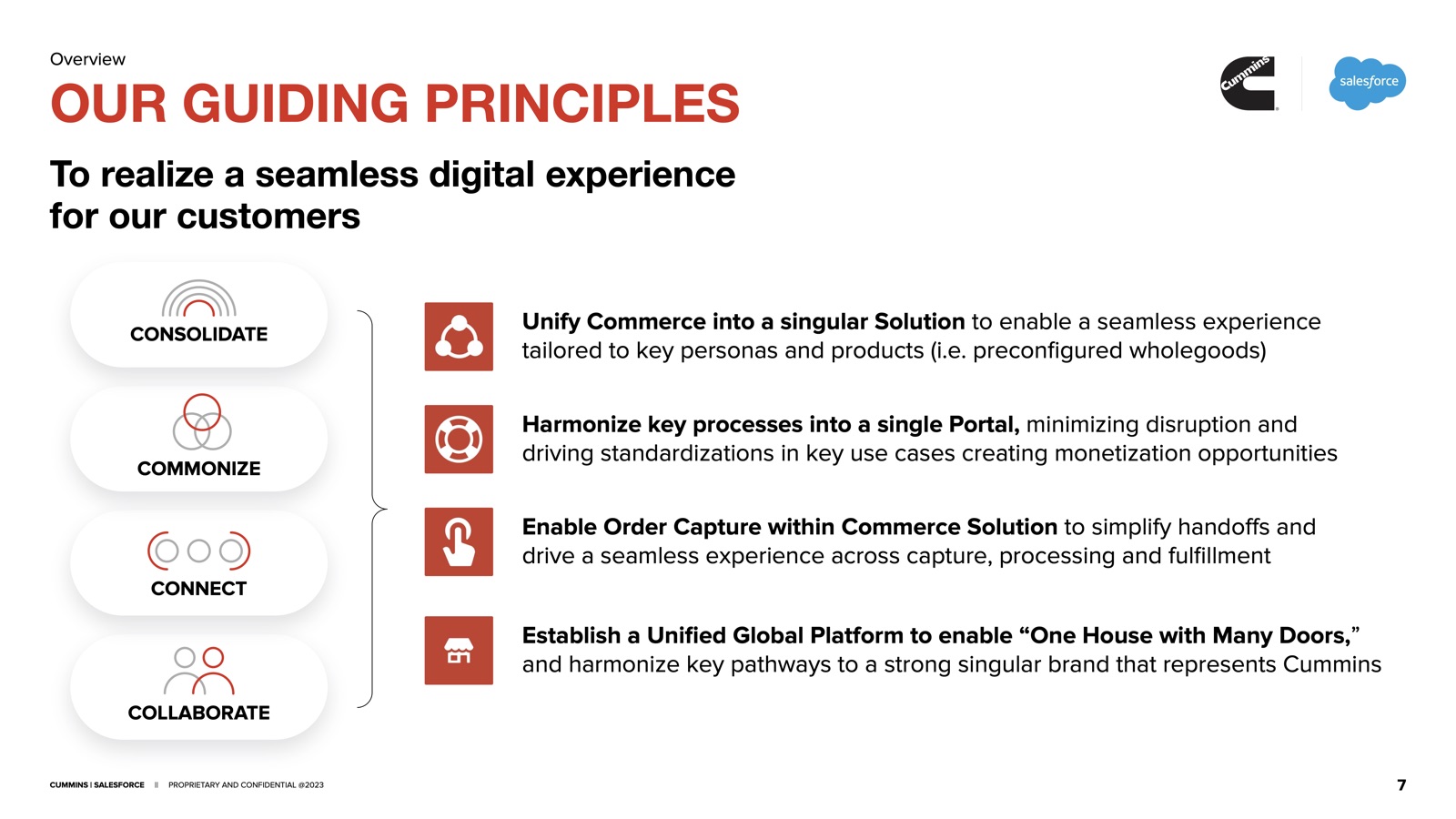
- Guiding principles — Consolidate, Commonize, Connect, Collaborate — the four tests every design decision had to pass
From research to validated prototype
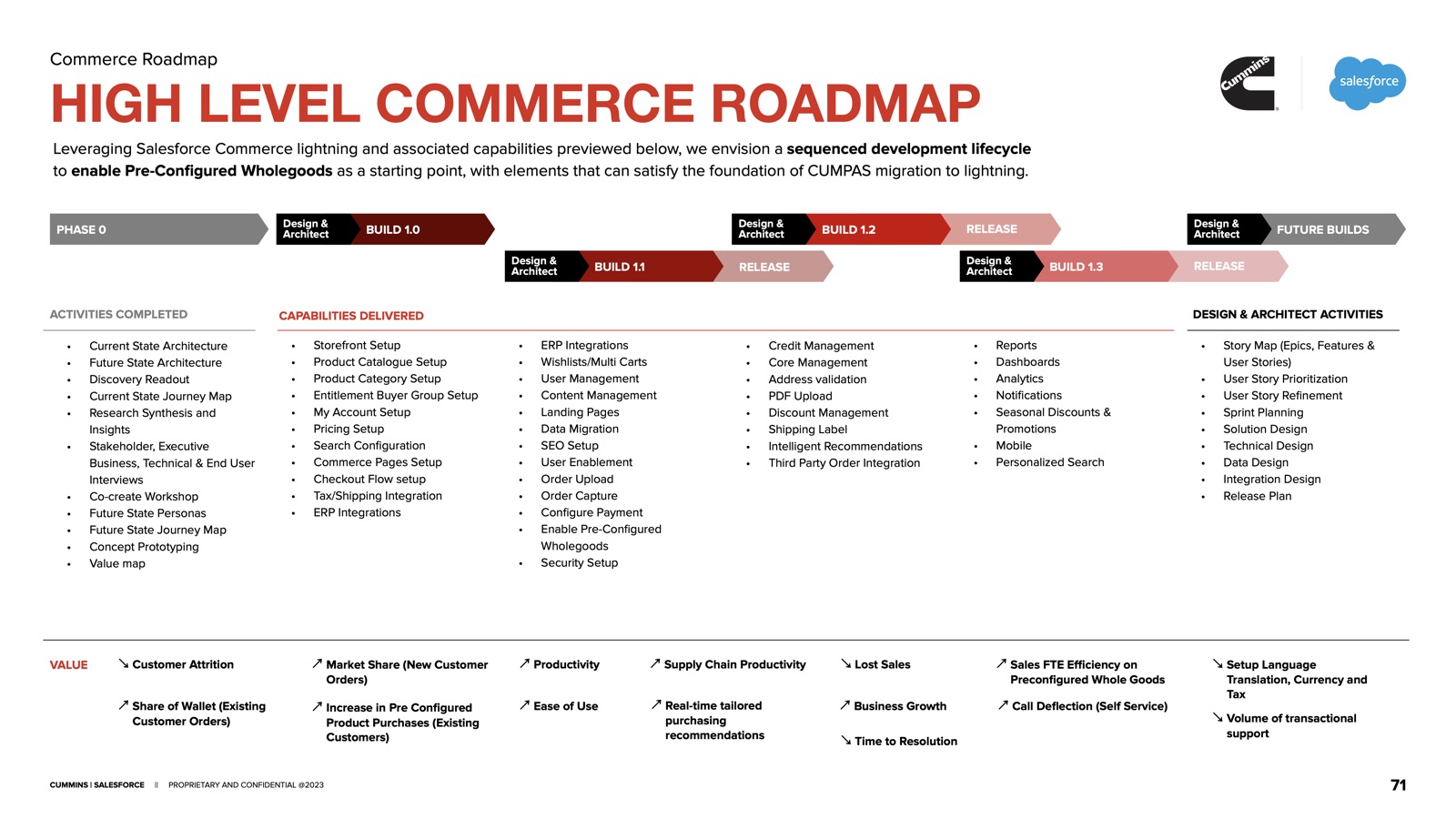
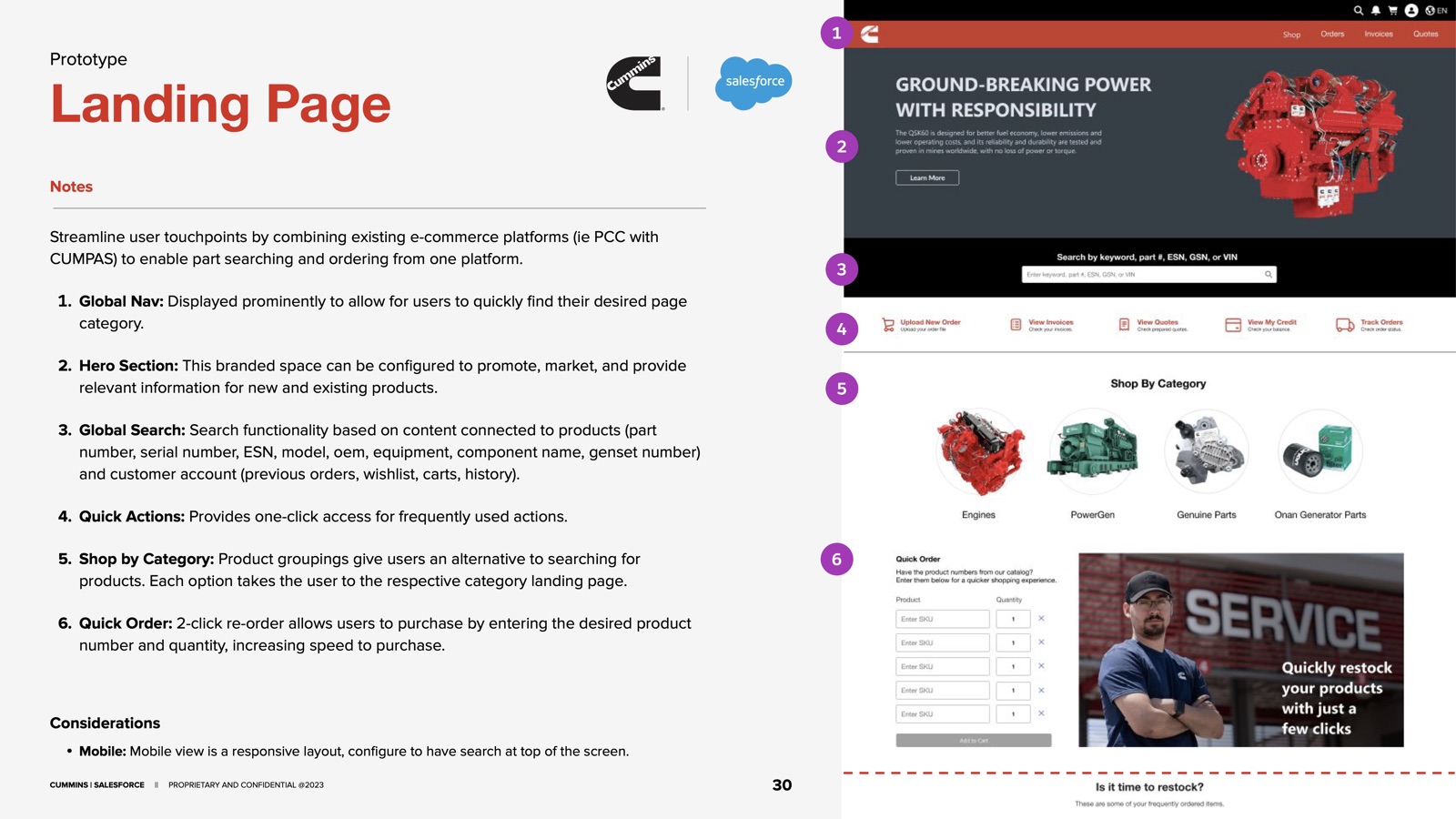
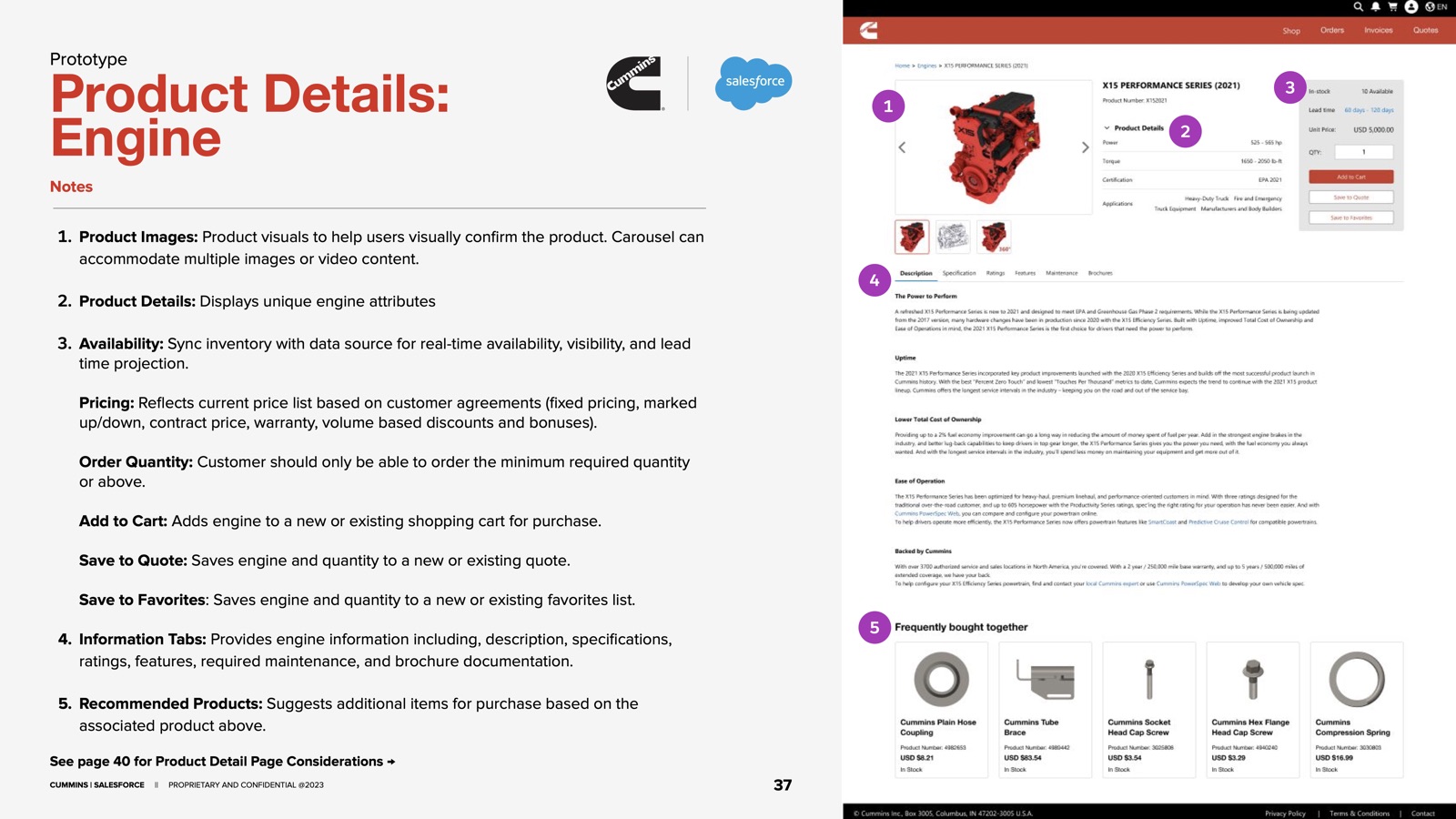
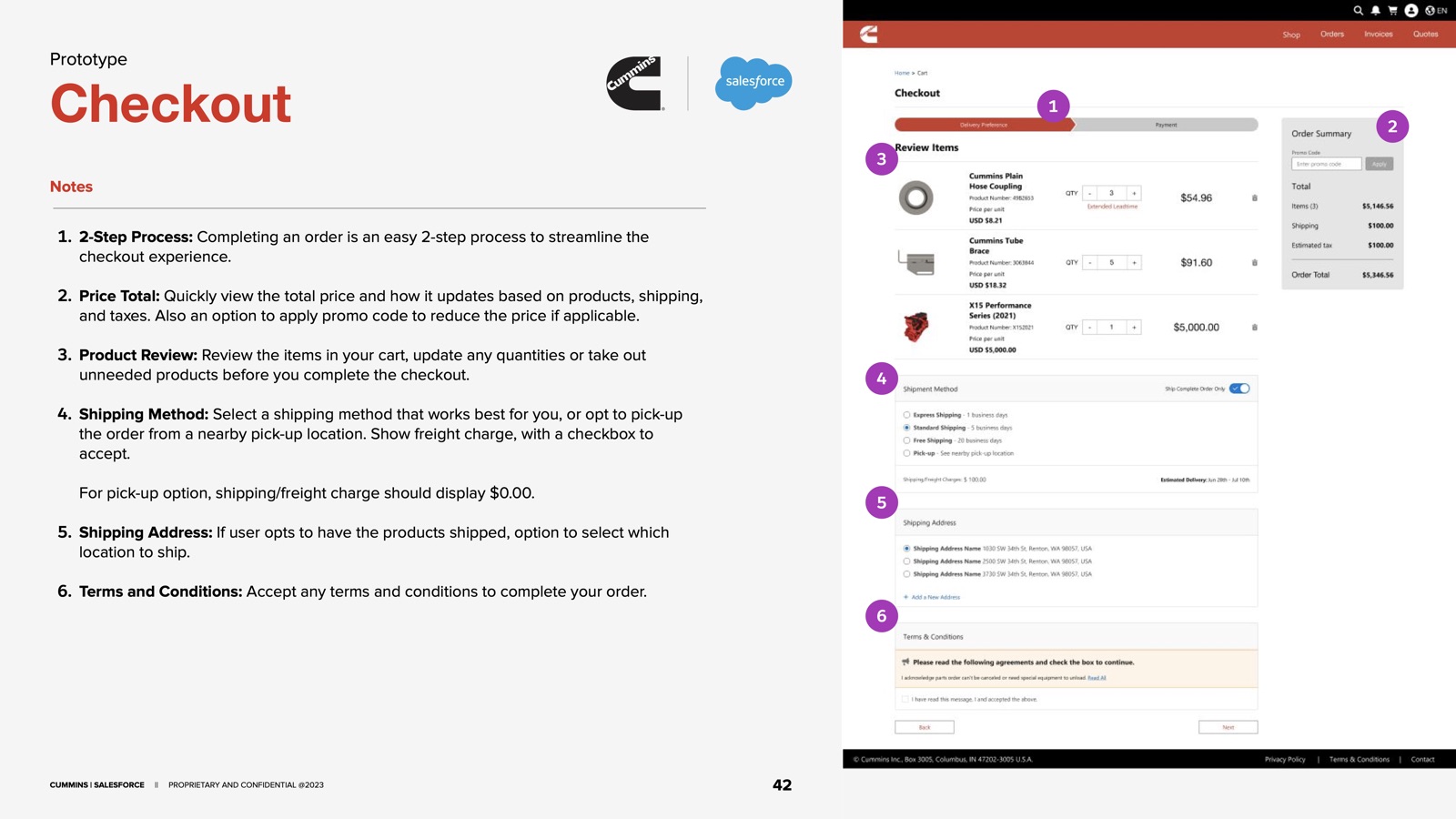
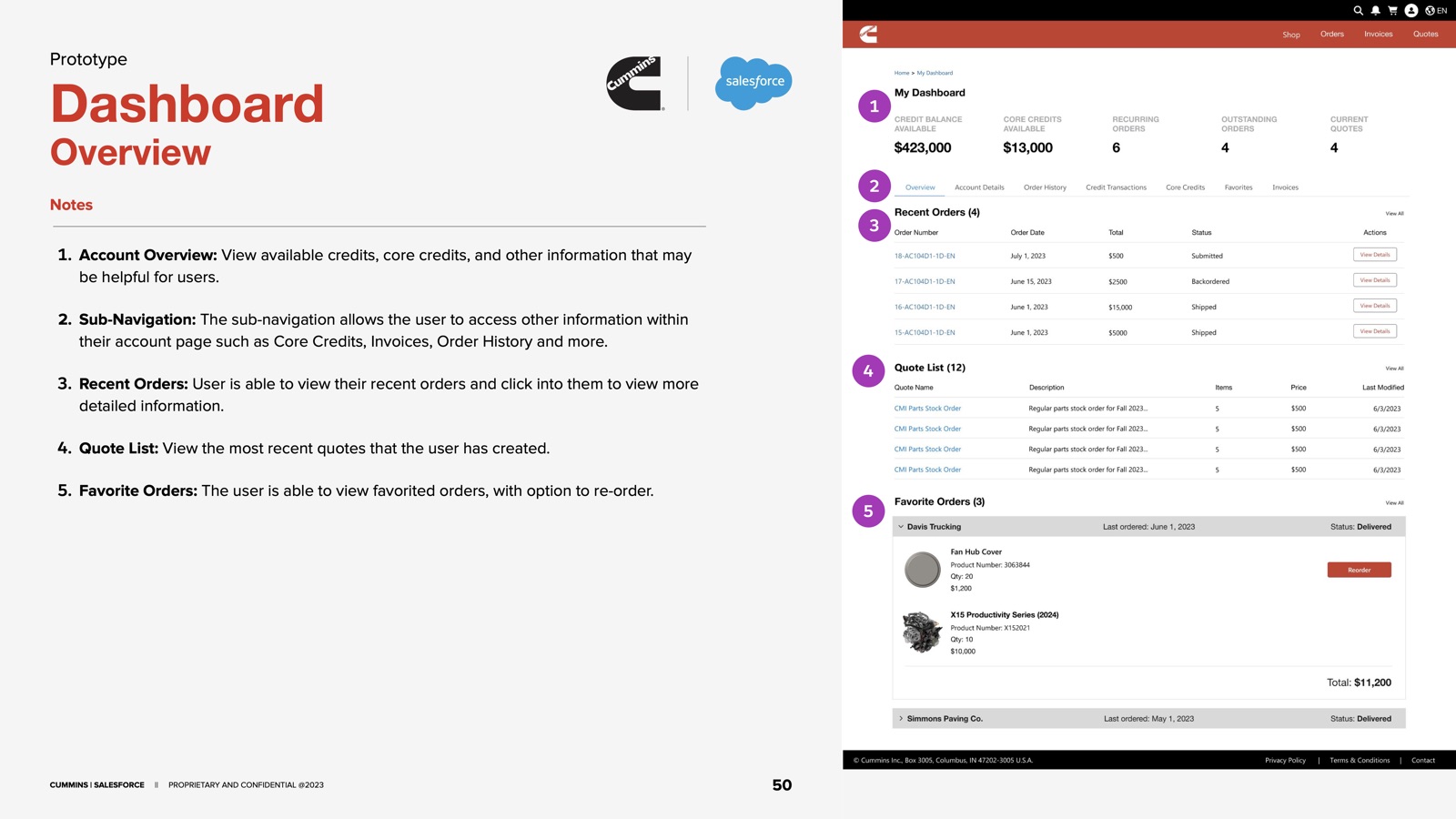
Selections from the final experience readout — the research foundation, the strategic frame, and the annotated prototype that carried the vision into build.
Deliverables that outlived the engagement
The readout delivered a business-validated prototype covering seven end-to-end use cases, nine personas, future-state journey maps, and a phased commerce roadmap onto Salesforce Commerce — presented to and approved by the client team on schedule.
The longer tail mattered more: the design patterns and deliverable formats from this engagement were reused as templates on subsequent manufacturing commerce engagements — the discovery structure, persona format, and annotated-prototype style became a starting point other teams built from.
What this engagement taught me
Research earns you the right to be bold. "Difficult to do business with" is a hard message to deliver to a proud company. 83 interviews meant it wasn't our opinion — it was their customers' voice, and it landed as a rallying cry instead of an insult.
Let stakeholders rank their own priorities. The voted use-case list did more for alignment than any persuasion could. When Product Detail beat everything else 23 votes to 14, scope debates ended before they started.
Annotate everything. The prototype's numbered rationale — why this nav, why two-step checkout — is what made it survive contact with architecture and build. Screens without reasoning get redesigned; screens with reasoning get built.