Daikin: rebuilding the dealer experience — 15 sites into one portal.
How a multi-year Salesforce program turned a fragmented dealer ecosystem into a single experience that dealers actually log into — and what it took to lead the Experience Cloud and Service Cloud workstreams that got it there.
The world's largest HVAC manufacturer, fifteen front doors
Daikin's dealer network — the independent contractors who sell, install, and service its equipment — is the engine of its North American business. But the digital experience serving that network had grown by accretion: fifteen separate sites, each with its own login, navigation, and conventions. Orders lived one place, invoices another, warranty somewhere else, training somewhere else again.
Every fragmented touchpoint was friction between Daikin and the dealers it competes to keep. Dealers vote with their loyalty — and their share of wallet — and the experience was giving them reasons to shop around.
One front door, without breaking fifteen workflows
Consolidation sounds simple until you inventory what those fifteen sites actually did. The program had to unify ordering, invoicing and statements, credit visibility, warranty, leads, loyalty, account management, and service into a single portal — while dealers kept running their businesses on the old sites, and while three delivery workstreams (experience, platform, data) moved in parallel.
The strategic risk wasn't building the wrong features. It was building the right features in a shape dealers wouldn't adopt — a portal that technically worked but didn't earn the login.
Experience Architect across two workstreams
I led both the Experience Cloud (dealer portal) and Service Cloud workstreams — and standardized the cross-functional "4-in-a-Box" delivery model that kept experience, functional, technical, and client leads operating as one unit per workstream instead of four separate lanes throwing work over walls.
- Future-state journey maps — the dealer's world before designing Daikin's answer to it
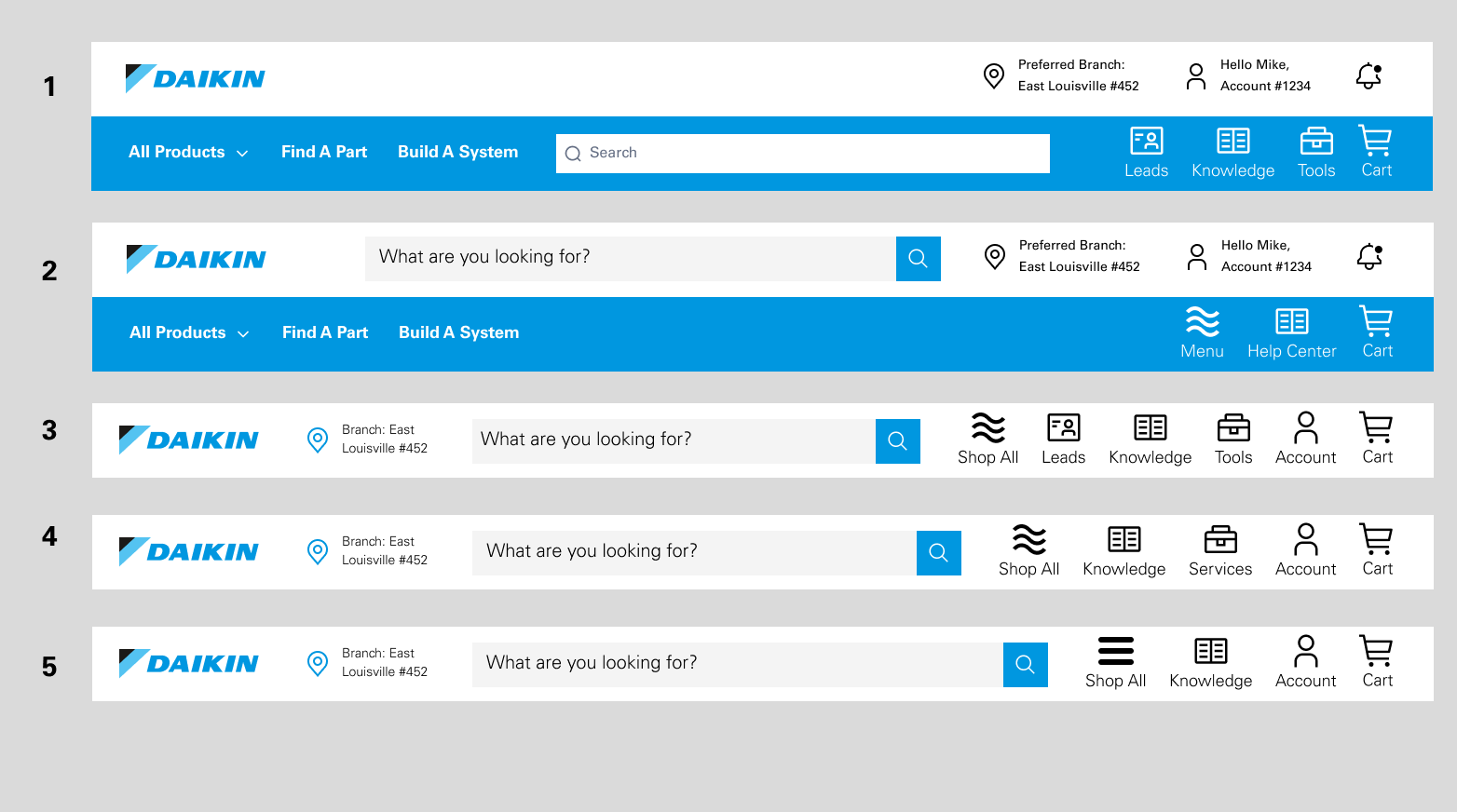
- Portal information architecture & navigation — collapsing fifteen mental models into one
- Commerce UI — product listing, product detail, and navigation patterns through production go-live
- Service experience — case flows tied to the 56% resolution-time improvement
- New Dealer Experience Cloud POC — proving the onboarding experience for dealers joining the network
From wireframe to production portal
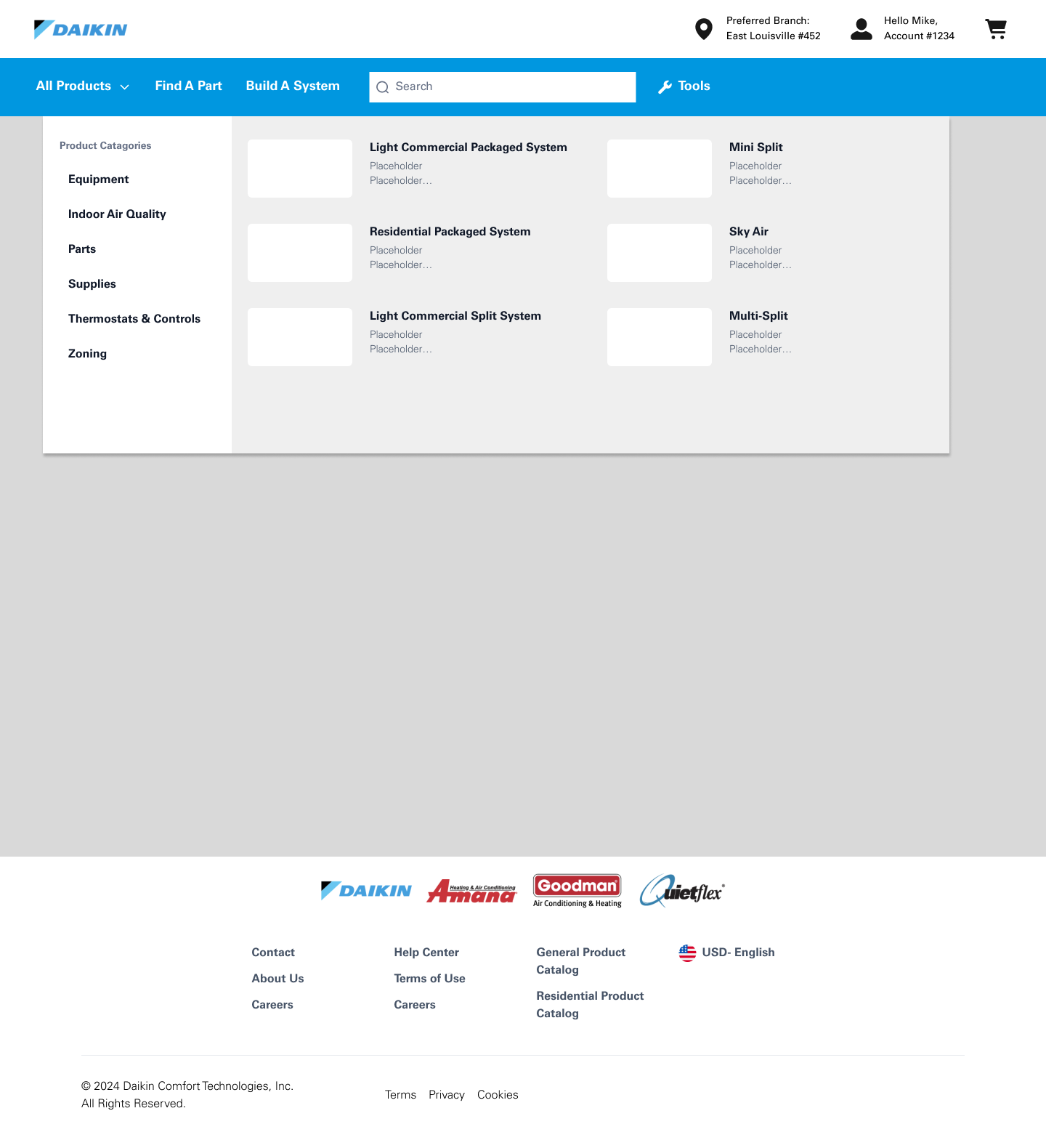
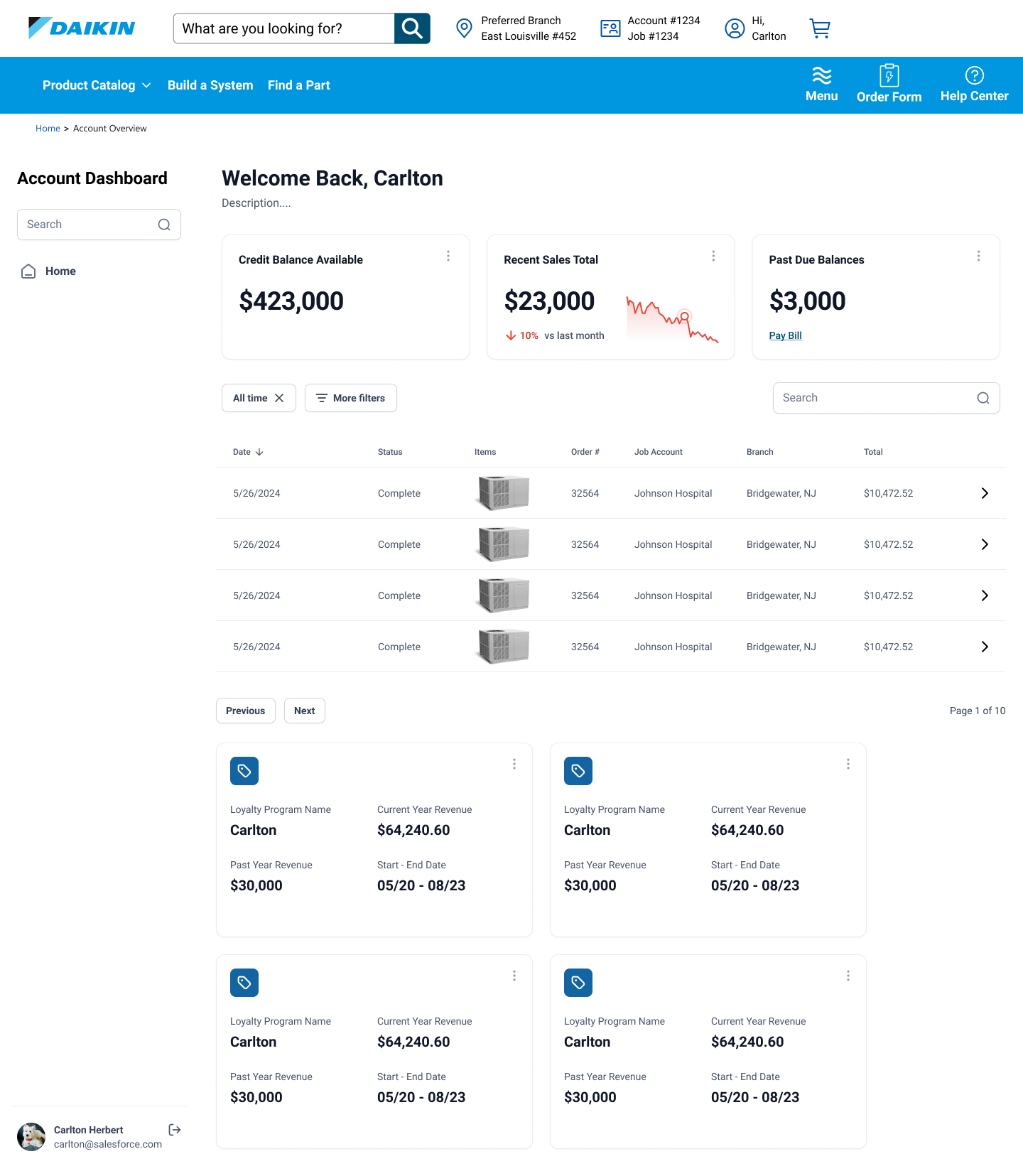
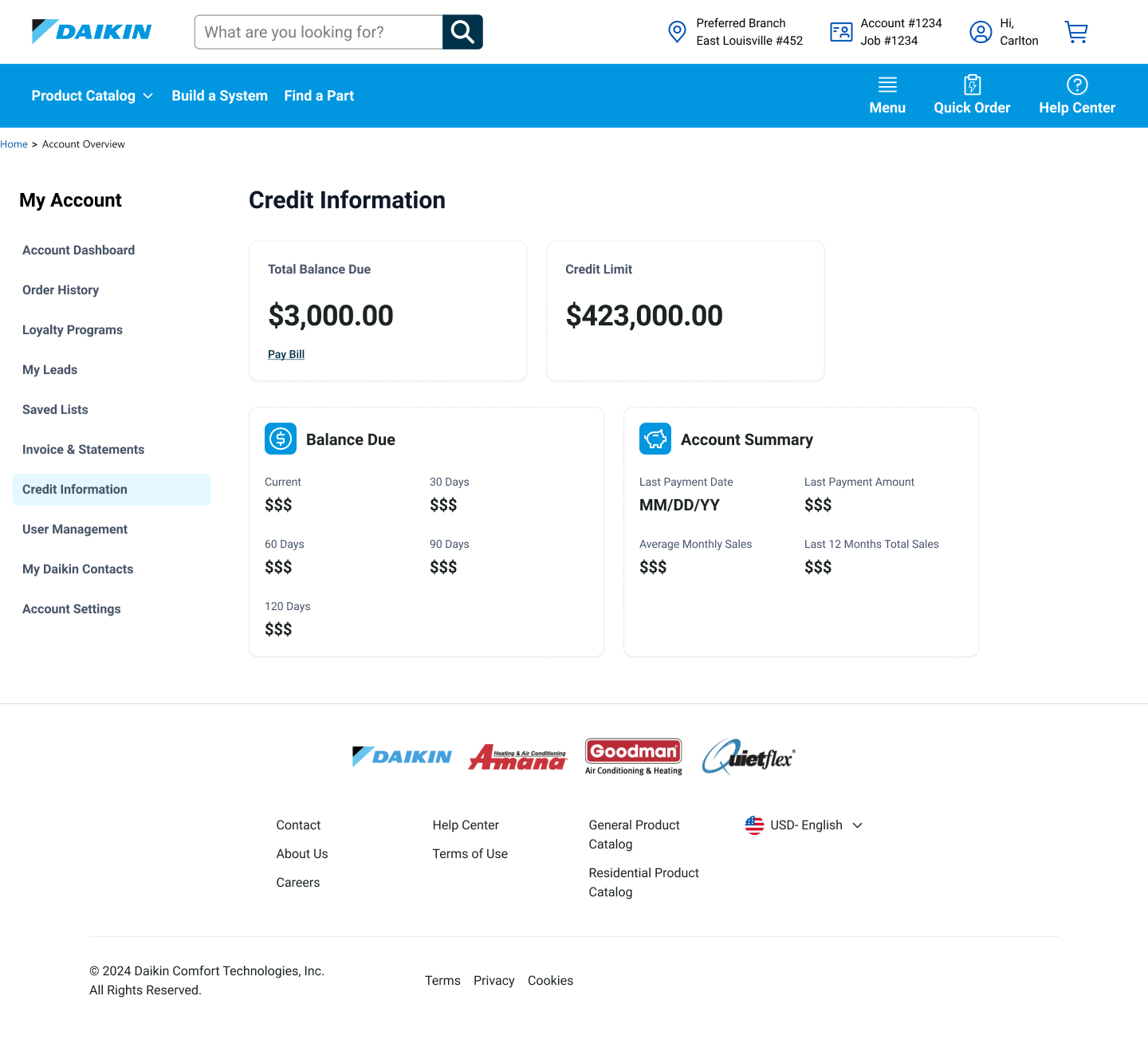
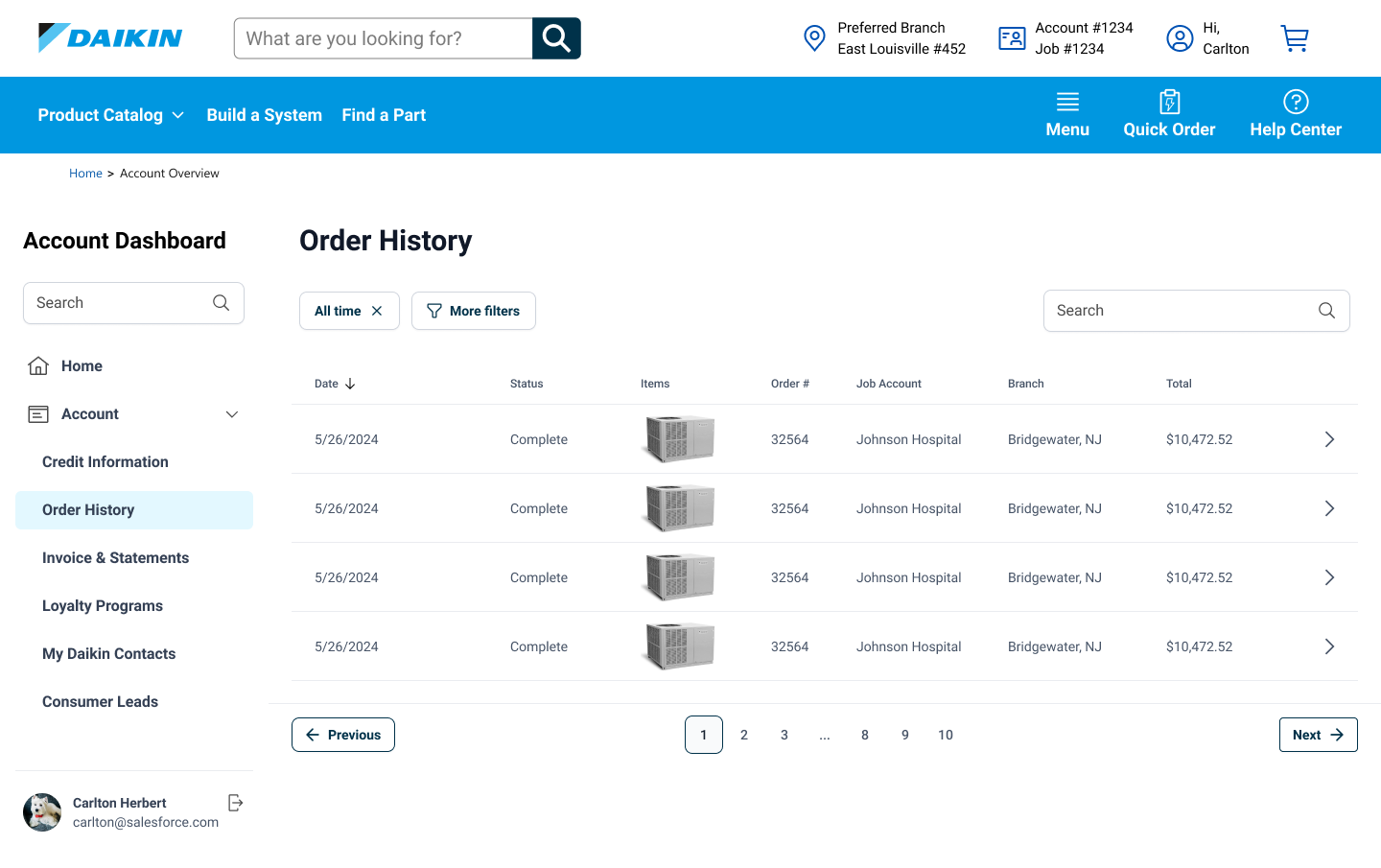
A selection of shipped design work across the portal — account, financials, orders, and leads — in desktop and mobile. Every screen here follows the same system: one navigation, one visual language, one login.

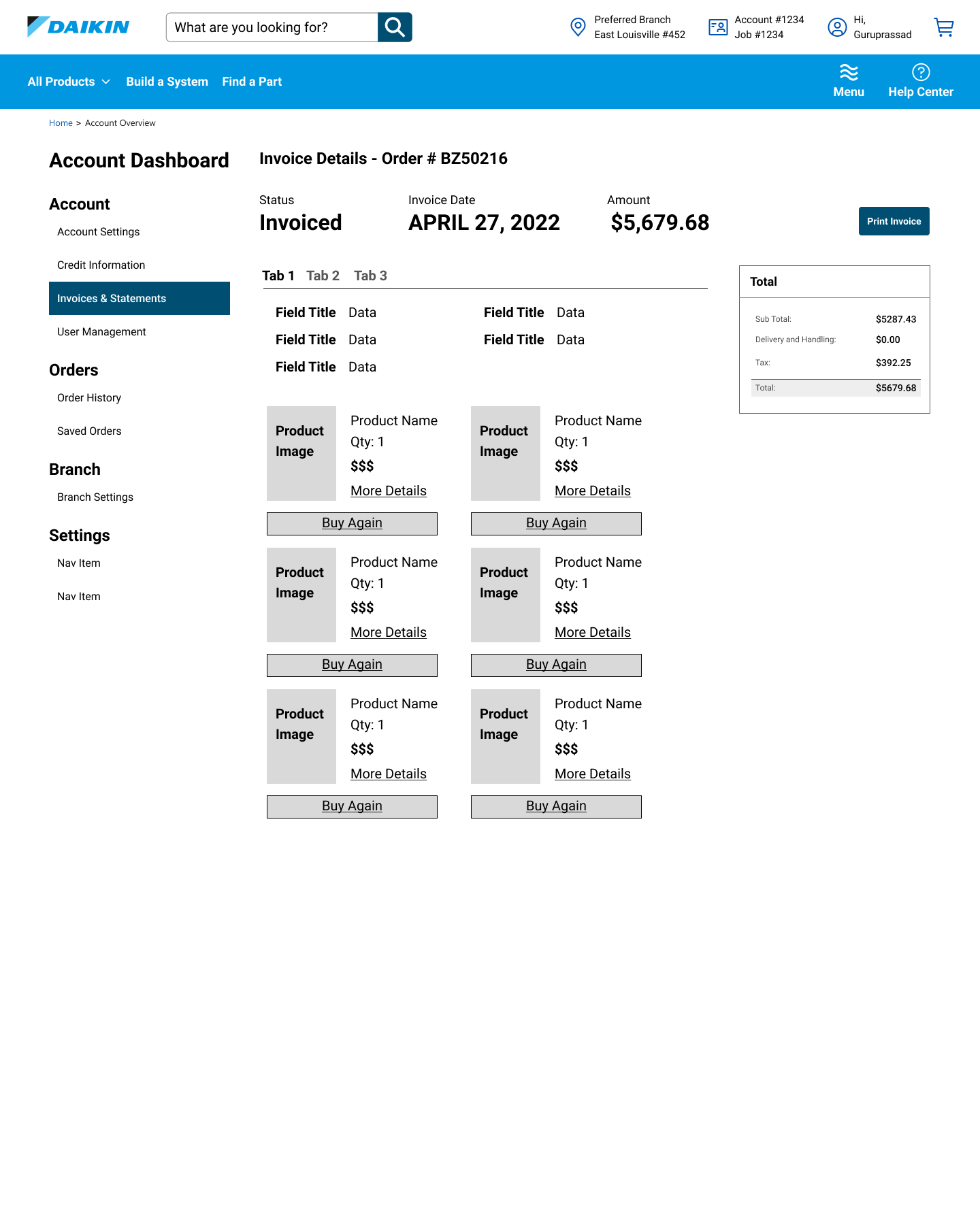
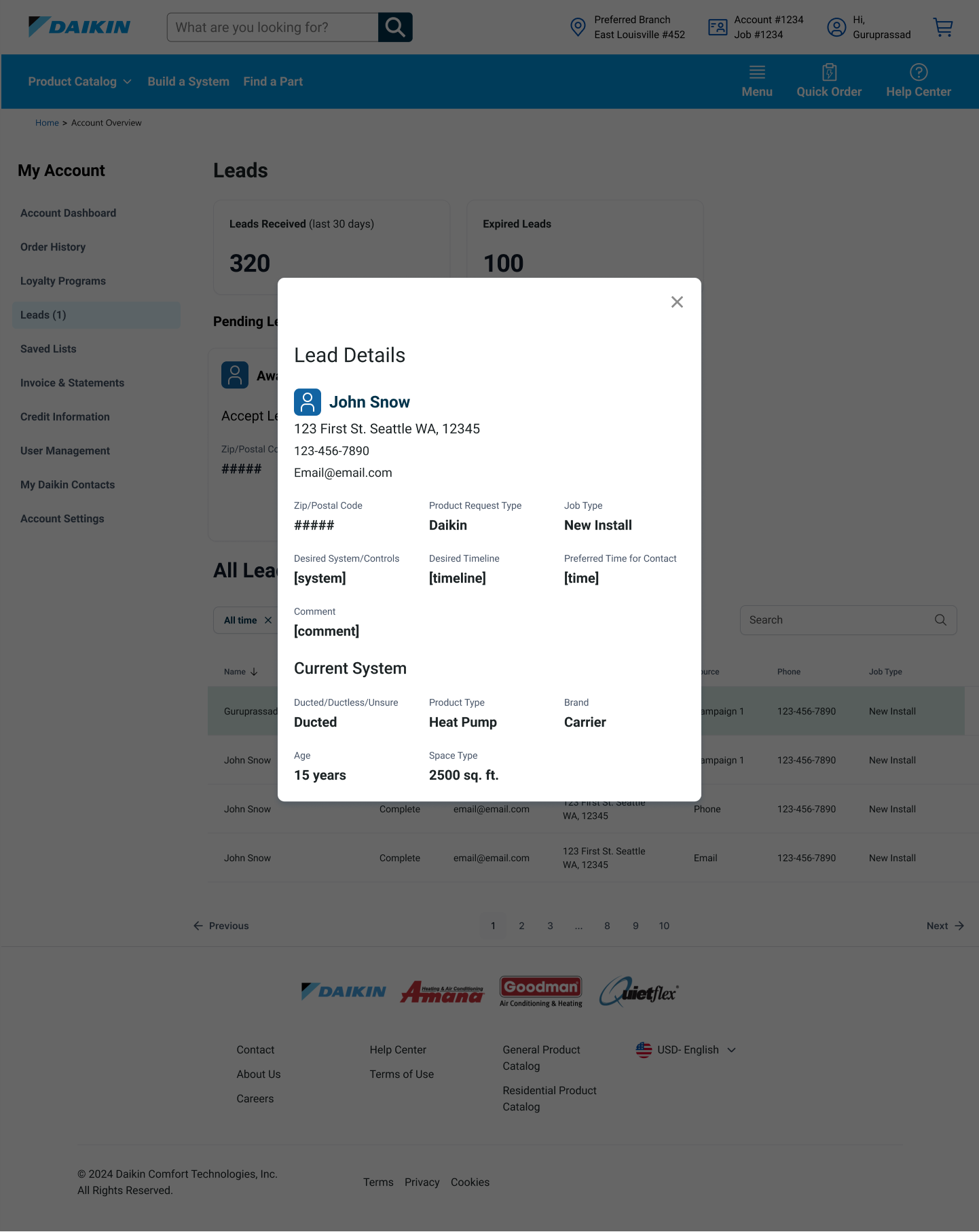
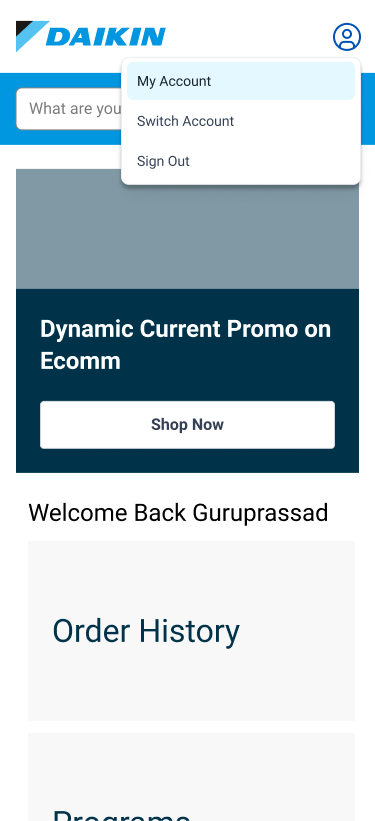
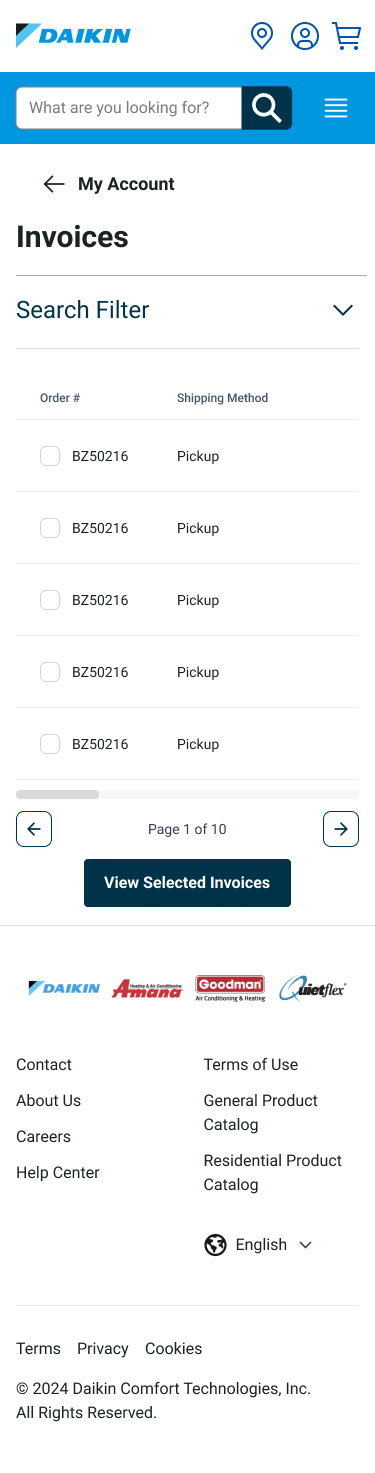
Dealers chose the portal
The program consolidated fifteen sites into one dealer portal — and the behavior followed. Across the program:
What this engagement taught me
Operating models beat deliverables. The "4-in-a-Box" structure I standardized did more for quality than any individual screen — when experience, functional, technical, and client leads share one backlog and one definition of done, rework disappears before it happens.
Adoption is the strategy. Every IA and design decision was tested against one question: does this give a dealer a reason to log in tomorrow? Features that couldn't answer it waited. That discipline is why the login and attrition numbers moved.
Mobile isn't a viewport, it's a context. Dealers approve orders from job sites and check credit from trucks. Designing mobile-first for financial workflows — collapsed scanning patterns, one-handed reach — was the difference between a portal that demos well and one that gets used.